Google Meditation
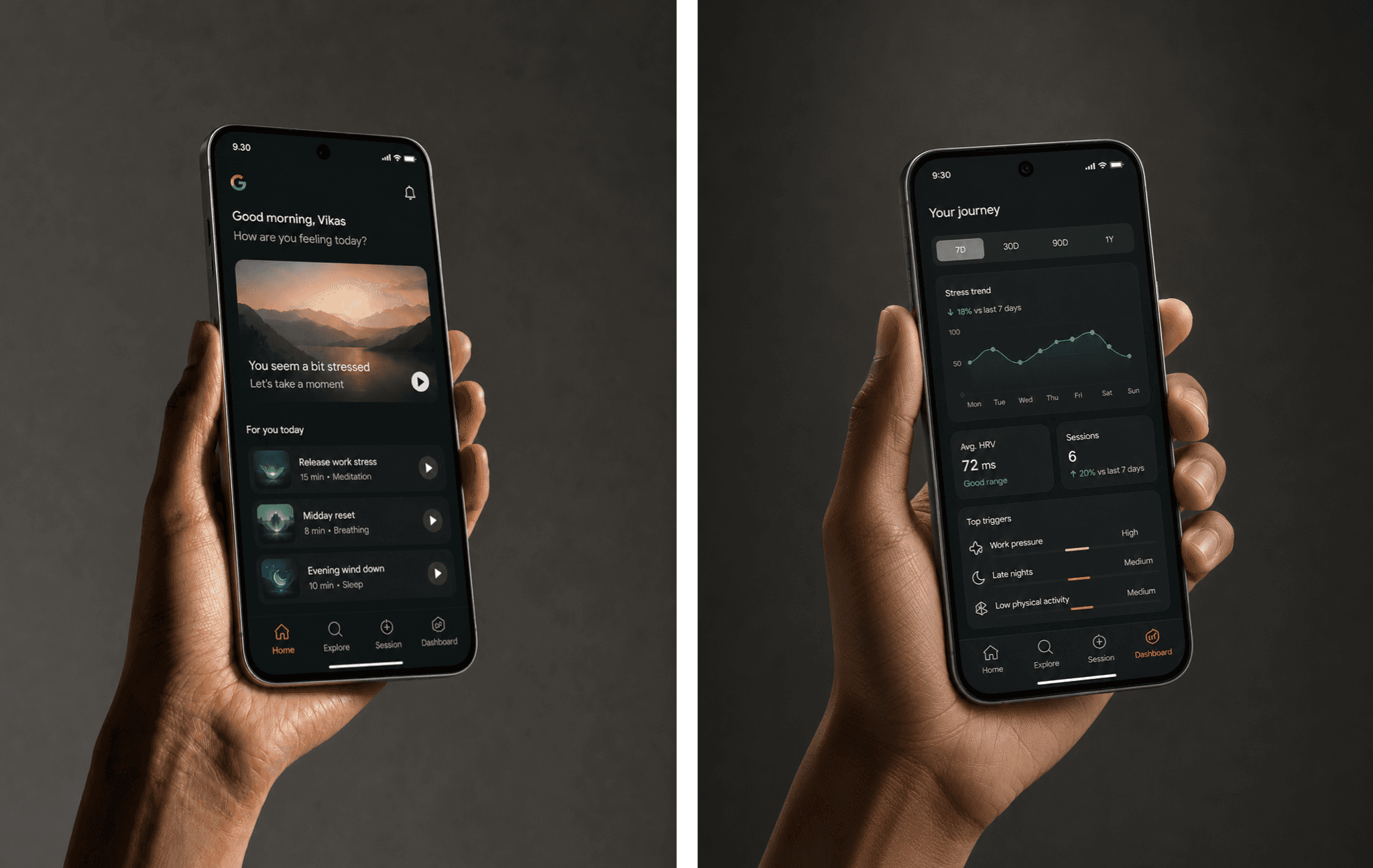
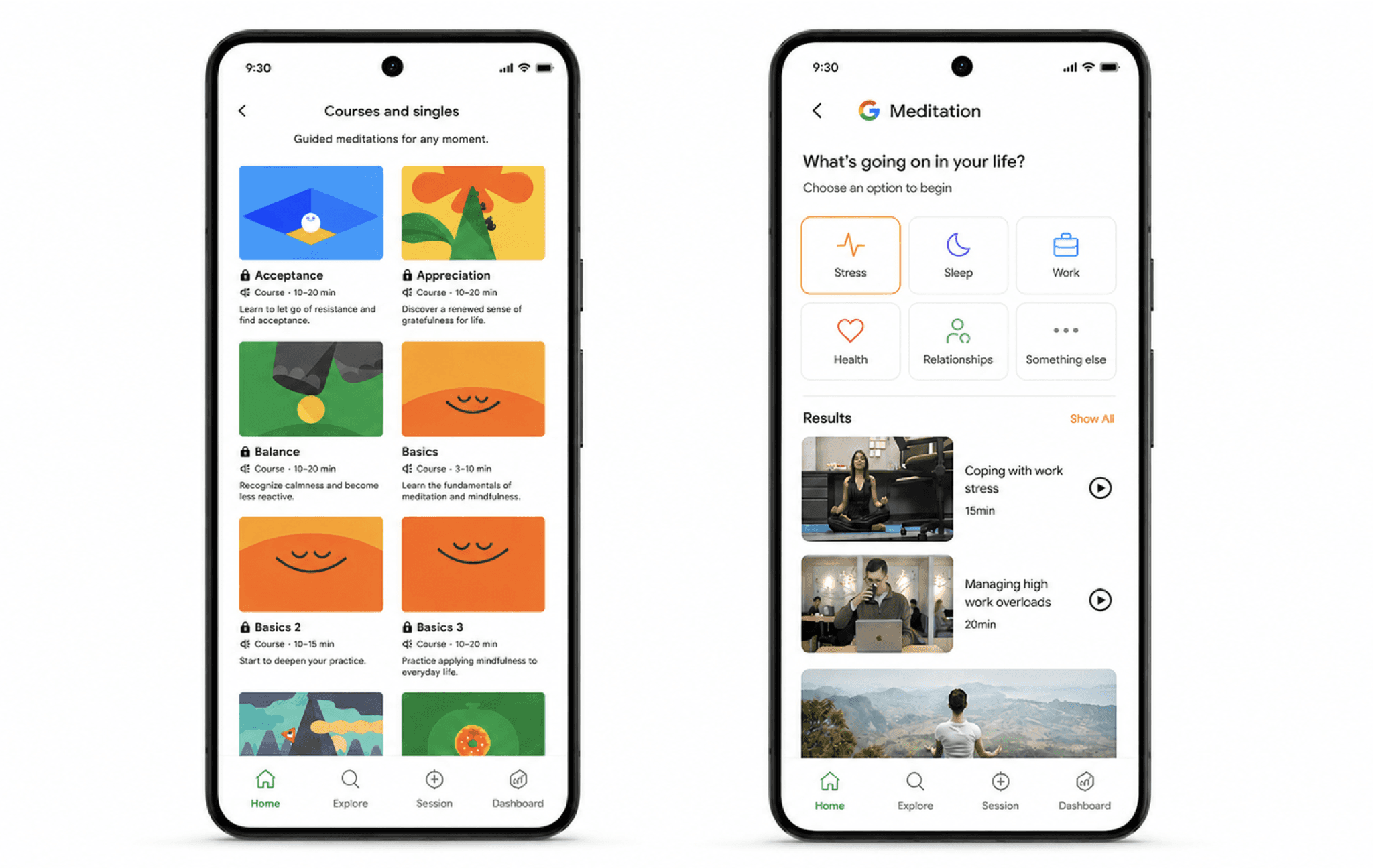
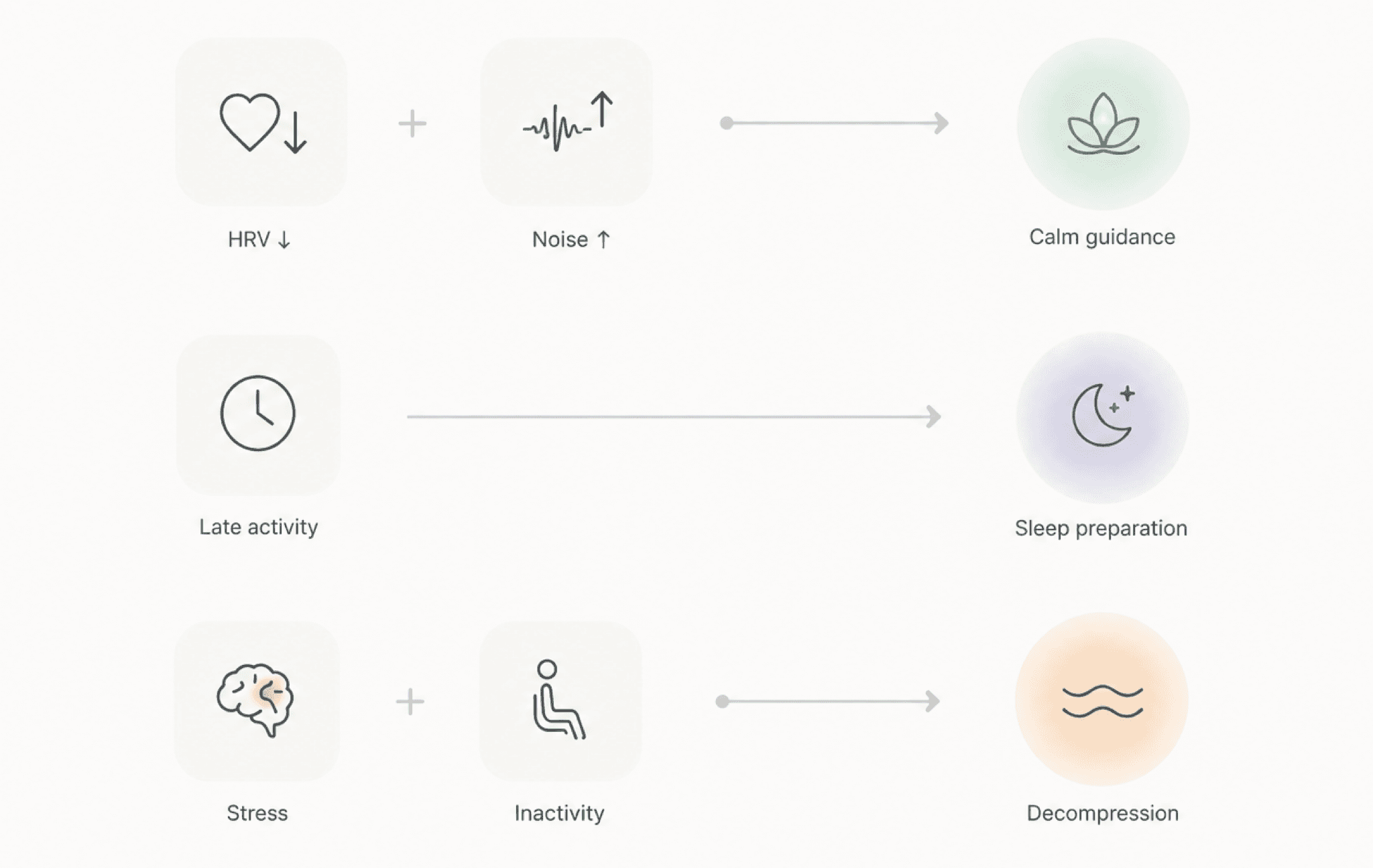
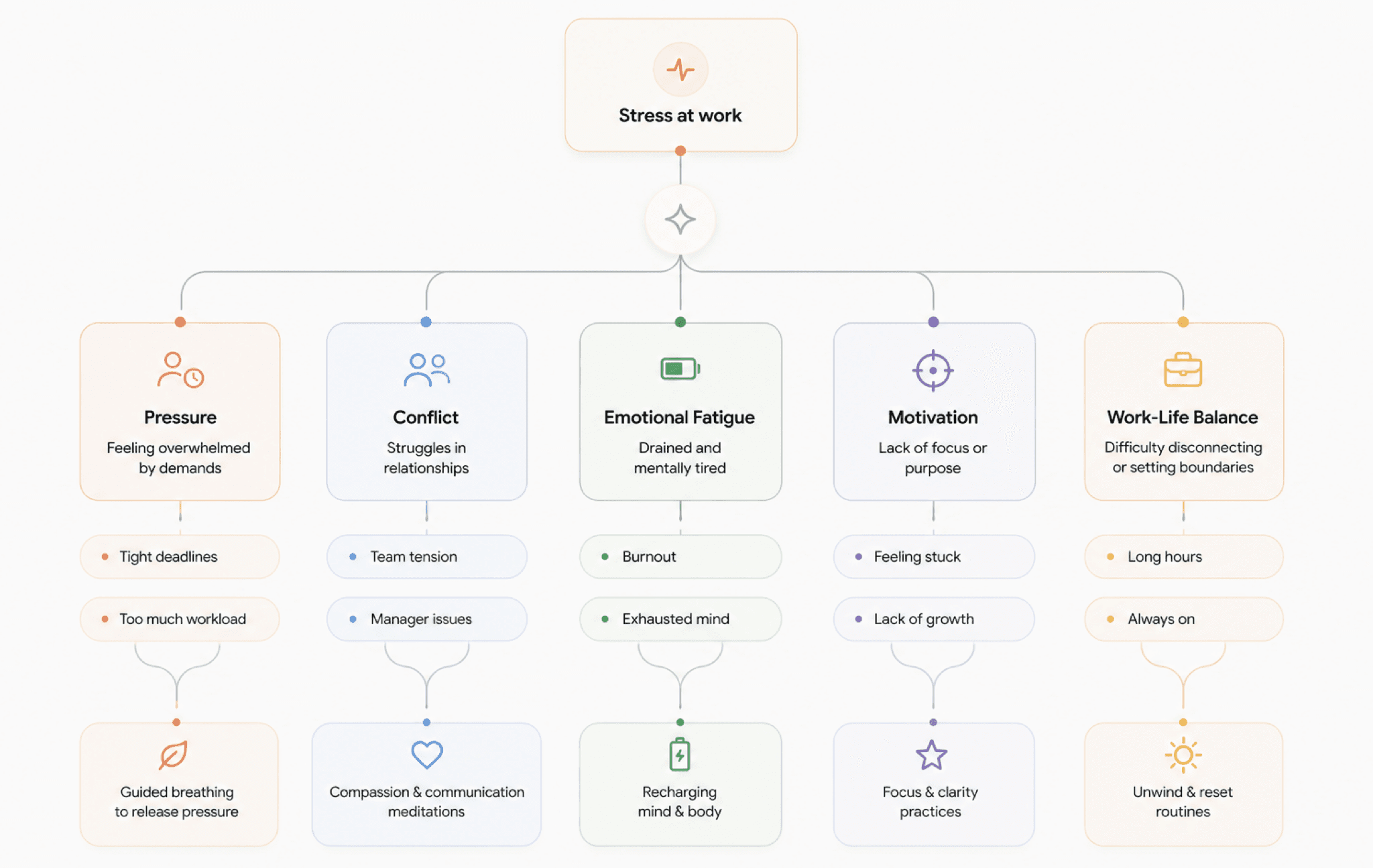
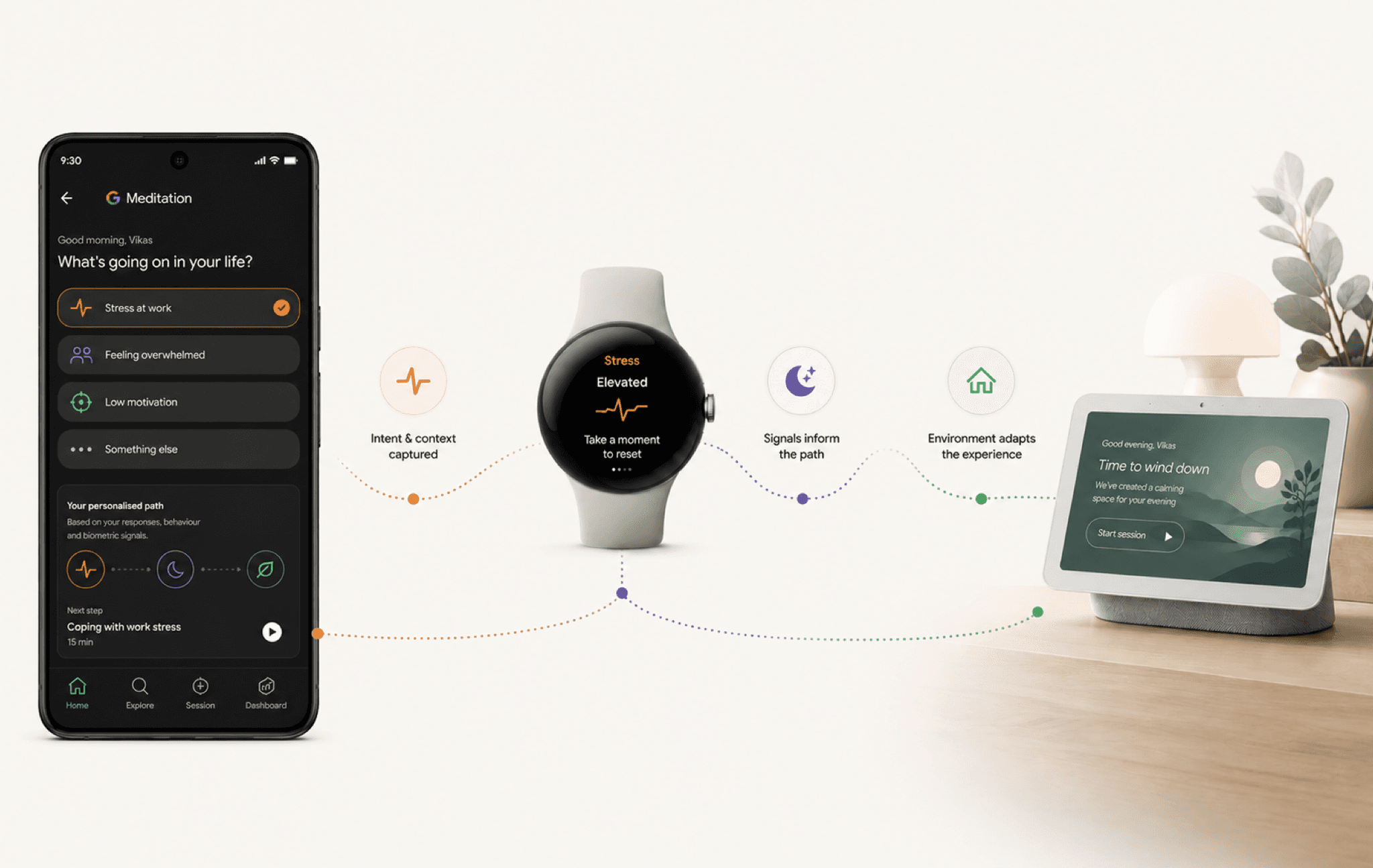
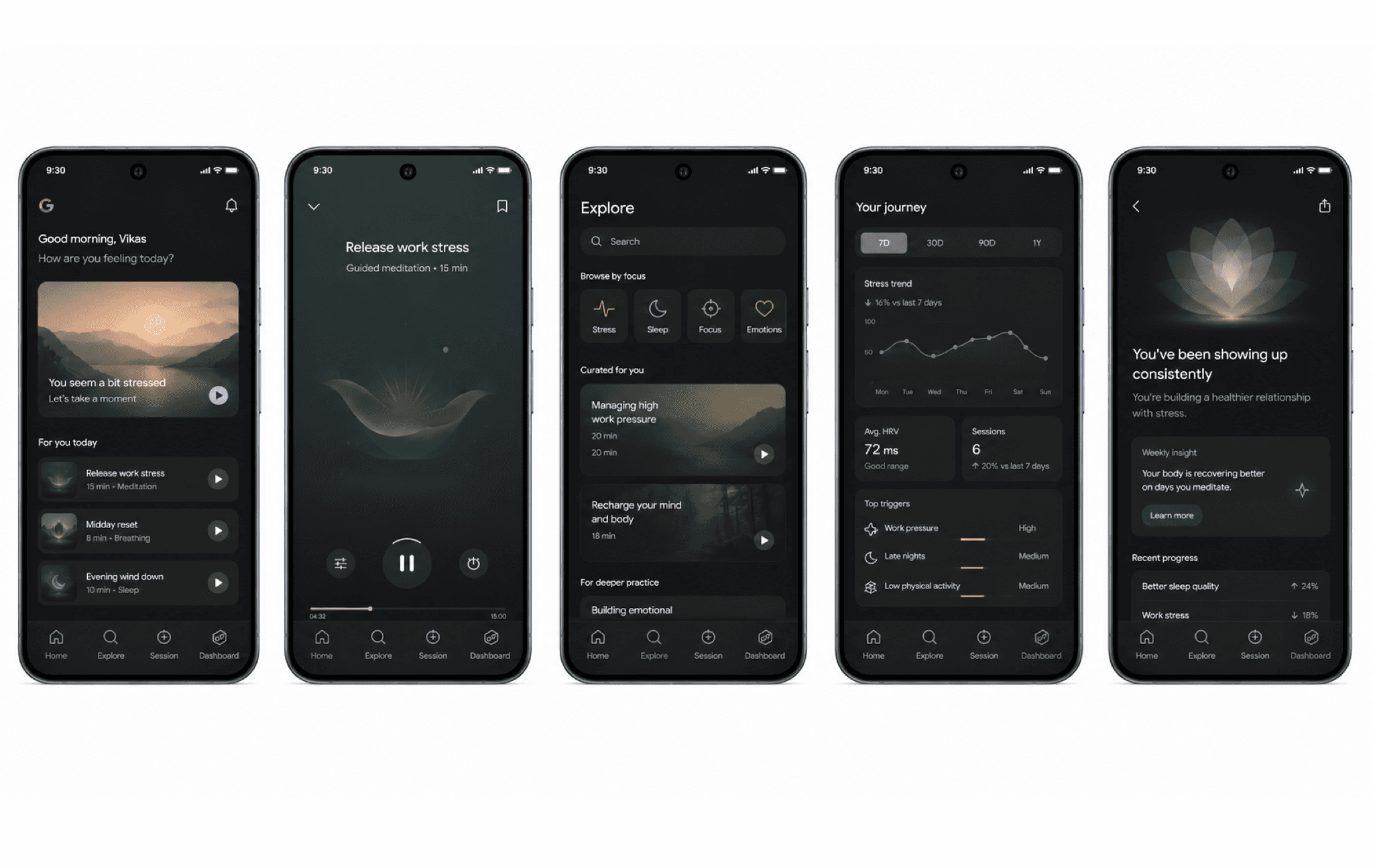
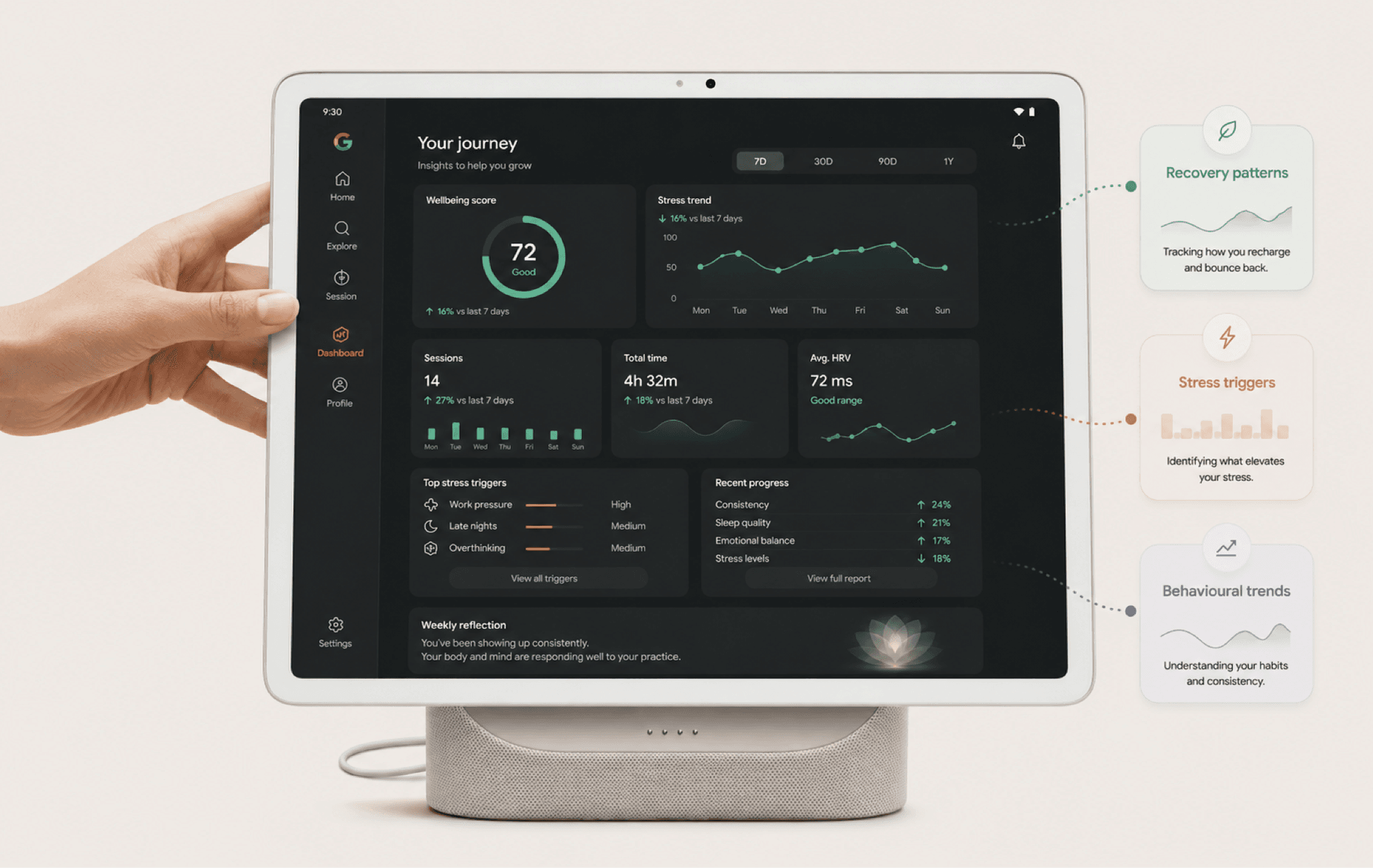
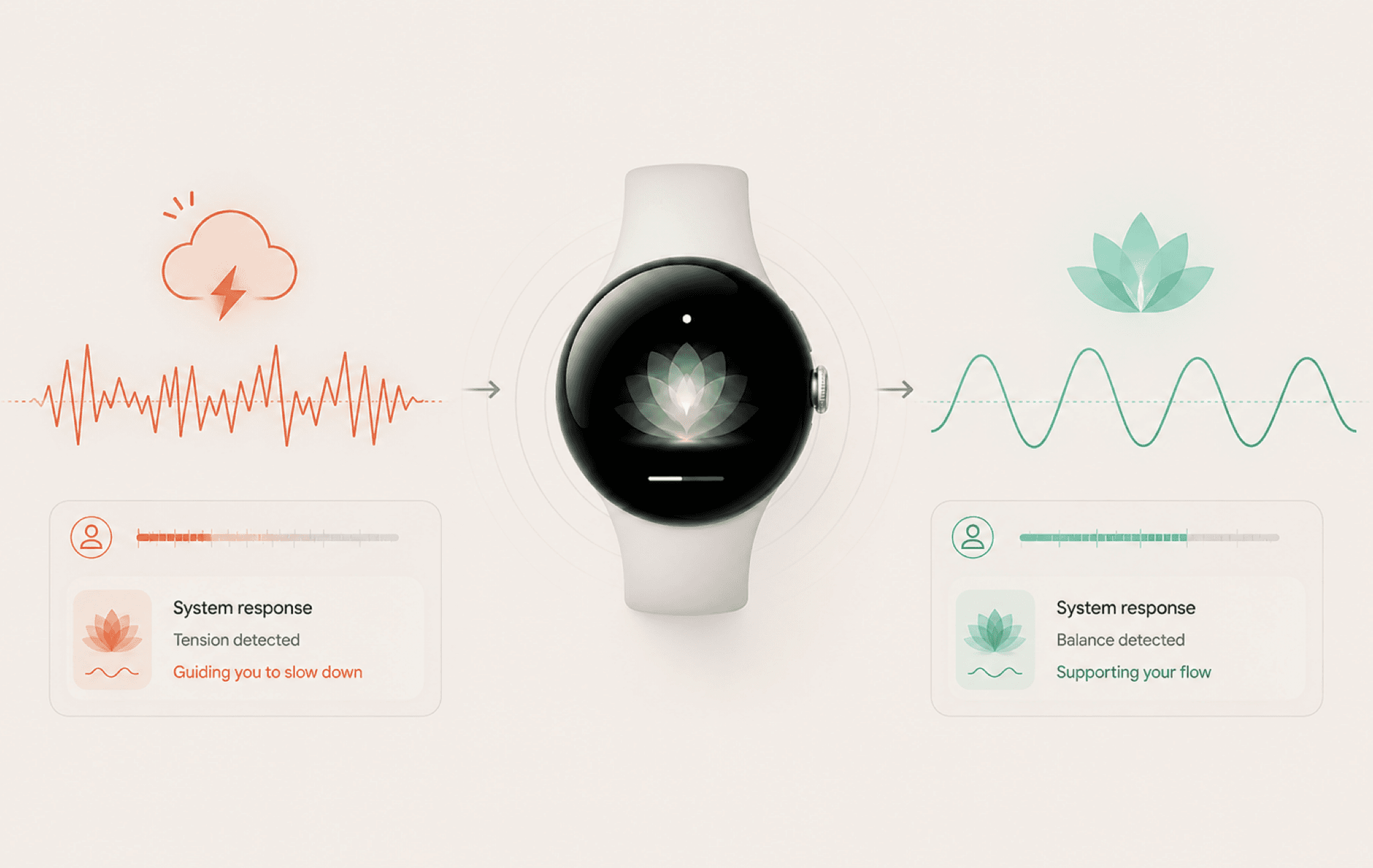
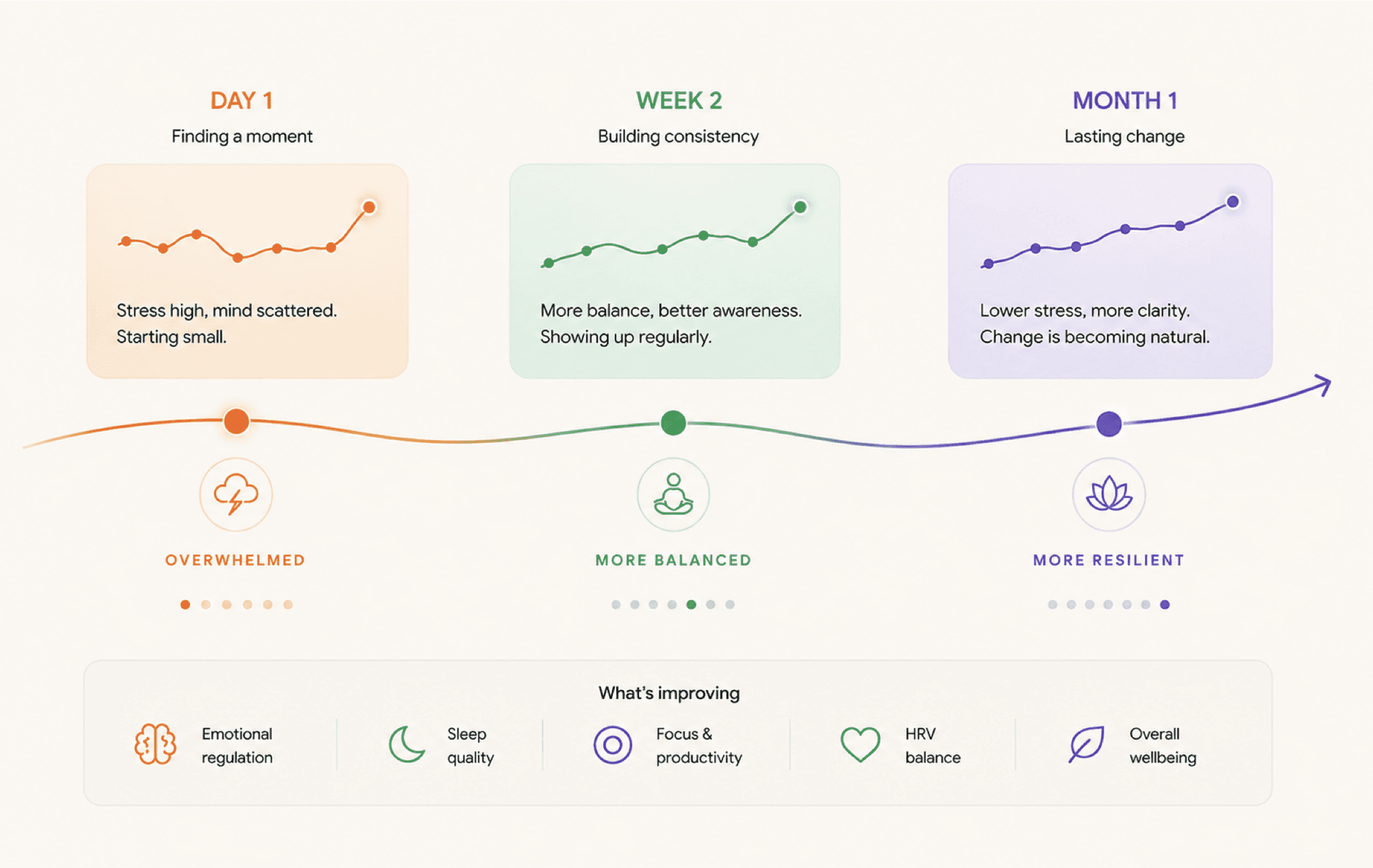
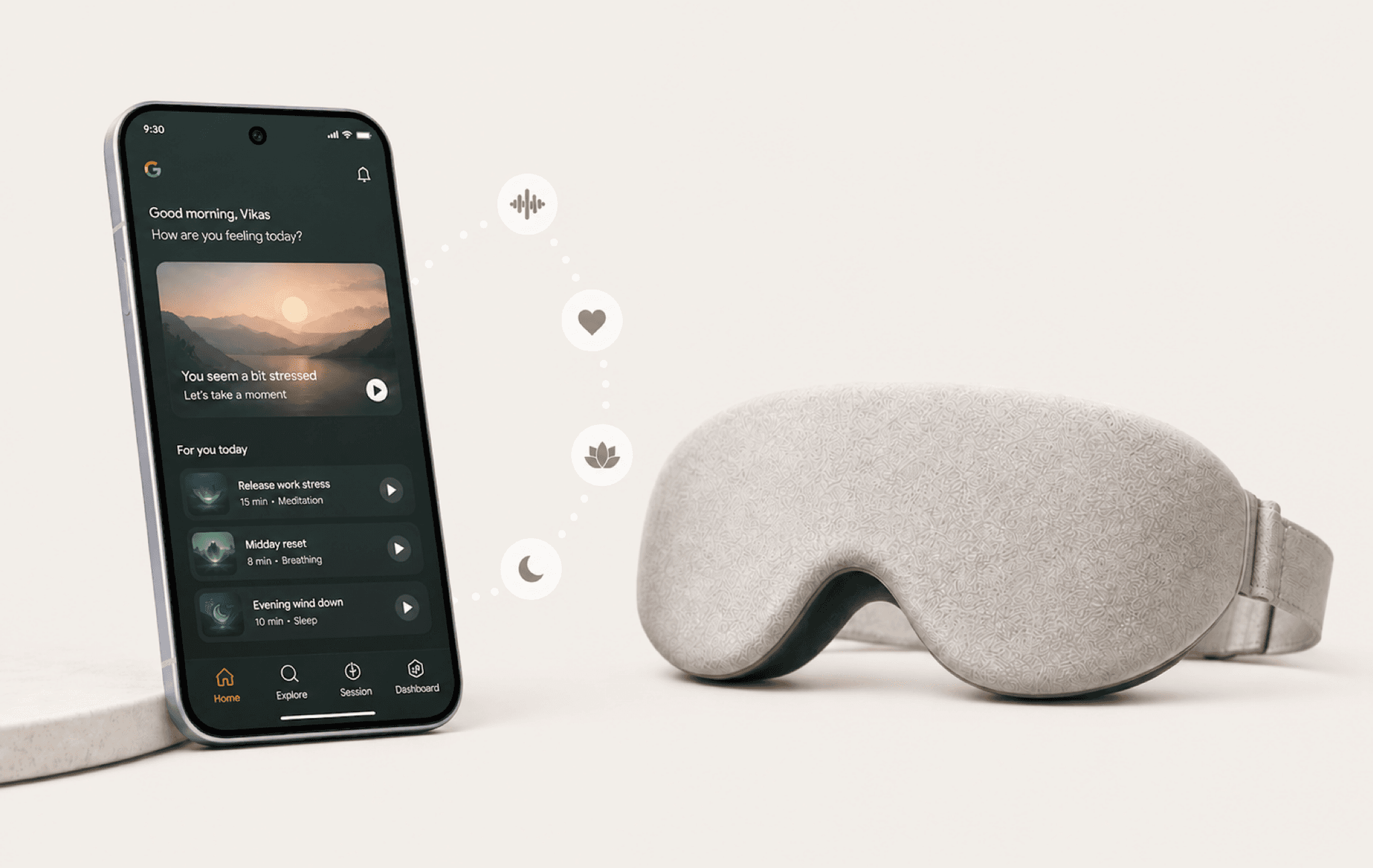
Most meditation products respond to symptoms rather than understanding the causes of stress. Google Meditation explores how AI, behavioural science and physiological sensing could create a more responsive wellbeing experience, adapting guidance to each person's emotional state rather than delivering the same intervention to everyone. Grounded in UX research, HRV science and mindfulness philosophy, the concept combines physiology, behaviour and contextual signals to helpi uncover potential causes of stress through progressive questioning, emotional mapping and adaptive guidance. Rather than simply tracking wellbeing, the system continuously learns from interaction to deliver more relevant support over time. The result is a product concept that reframes meditation as an intelligent relationship between mind, body and behaviour, demonstrating how adaptive AI product systems can translate complex biometric and emotional data into clear, human-centred experiences.
Most meditation products respond to symptoms rather than understanding the causes of stress. Google Meditation explores how AI, behavioural science and physiological sensing could create a more responsive wellbeing experience, adapting guidance to each person's emotional state rather than delivering the same intervention to everyone. Grounded in UX research, HRV science and mindfulness philosophy, the concept combines physiology, behaviour and contextual signals to helpi uncover potential causes of stress through progressive questioning, emotional mapping and adaptive guidance. Rather than simply tracking wellbeing, the system continuously learns from interaction to deliver more relevant support over time. The result is a product concept that reframes meditation as an intelligent relationship between mind, body and behaviour, demonstrating how adaptive AI product systems can translate complex biometric and emotional data into clear, human-centred experiences.
Most meditation products respond to symptoms rather than understanding the causes of stress. Google Meditation explores how AI, behavioural science and physiological sensing could create a more responsive wellbeing experience, adapting guidance to each person's emotional state rather than delivering the same intervention to everyone. Grounded in UX research, HRV science and mindfulness philosophy, the concept combines physiology, behaviour and contextual signals to helpi uncover potential causes of stress through progressive questioning, emotional mapping and adaptive guidance. Rather than simply tracking wellbeing, the system continuously learns from interaction to deliver more relevant support over time. The result is a product concept that reframes meditation as an intelligent relationship between mind, body and behaviour, demonstrating how adaptive AI product systems can translate complex biometric and emotional data into clear, human-centred experiences.
Role
Independent Concept
Scope
Behavioural UX • Wellbeing • Adaptive Systems





More Work




More Work
More Work
Copyright © 2026, Vikas Patel